Nayanjyoti Barman, born and raised in Assam, currently resides in Bangalore. He holds two bachelor’s degree, one in History Honors (2013-15) from Guwahati University, Assam, and another in Fine Arts from Kala Bhavana, Visva-Bharati University, Shantiniketan (2015-19). He also earned a master’s degree in Visual Arts from Maharaja Sayajirao University, Baroda (2019-21) and is a two-time gold medalist. Nayanjyoti has participated in numerous accolades and exhibitions, including the Student’s Biennale twice (2018 & 2020) organized by Kochi Biennale Foundation, and his work was selected for Luca Biennale Italy 2019, Venice. He also received the In Transit Emerging Artist Award 2021 in Ahmedabad, participated in Art Family London, and was awarded the Mrinalini Mukherjee Grant (2021). Other honors include the Gujral Foundation Artdemic Award, Kriti Fellowship 2022, Lalit Kala Academy Garhi Research Scholarship 2021-22, Ministry of Culture National Scholarship 2021, Hyundai Motors Art for Hope Grant 2023, Space 118 Production Grant 2023, and Zhuwei International Artist Residency, Taiwan 2024.
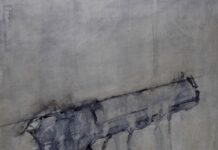
The title “Fatman” carries a double meaning. On one hand, it refers to the sumo wrestler’s imposing size, a symbol of cultural pride and physical power. On the other hand, it echoes the name of the bomb that caused immense destruction and suffering. By connecting these two images, the artwork creates a powerful contrast
between the positive strength of the wrestler and the destructive power of the bomb.
This piece is deeply evocative, drawing on the profound and tragic history of Hiroshima and Nagasaki. The work uses each element metaphorically, forming a narrative that addresses the haunting consequences of war. The abstract shapes and symbols might represent the chaos and devastation that resulted from the bombings, while the overall form of the artwork might evoke a sense of sorrow and regret. The imagery, possibly influenced by the stark contrasts and the delicate balance between destruction and the hope for peace, invites the viewer to reflect on the irreversible impact of these historical events. The visual elements may embody the very essence of destruction—the explosive force that obliterated cities and lives,
yet also serves as a poignant reminder of the human capacity for both violence and reconciliation.
This artwork serves not only as a remembrance of the past but also as a cautionary tale for the future, emphasizing the importance of peace and the catastrophic consequences of war. Through this powerful visual statement, I am urging viewers to remember the lessons of Hiroshima and Nagasaki, ensuring that such devastation is never repeated.